
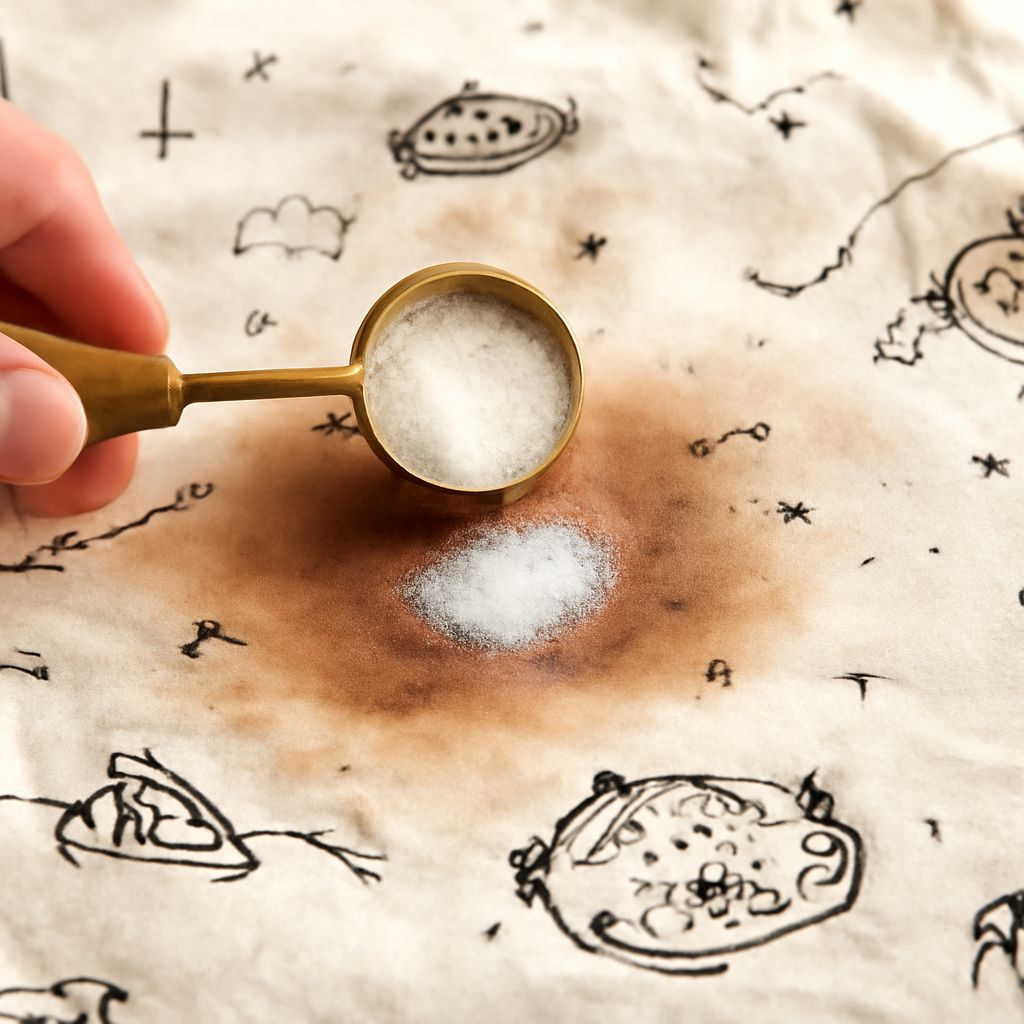
To learn how to get coconut oil out of clothes, treat the mark as a grease stain before washing. Blot away excess oil, cover the spot with an absorbent powder, brush it off, then work in liquid detergent.
Coconut oil is easiest to remove while fresh. Do not put the garment in a dryer until the dark mark has disappeared, because heat can set remaining oil deeper into the fibers.
Does coconut oil stain clothes? Why it leaves a dark mark
Yes, coconut oil can stain clothes. If you are asking, does coconut oil stain, the answer depends partly on the fabric and the amount spilled, but the oil can leave a translucent, darker patch on both light and dark garments.
The mark comes from oil coating the fibers rather than simply sitting on the surface. Coconut oil may also solidify in a cool room, making the residue less obvious at first. Warm water and detergent help loosen it, but heat from a tumble dryer can make an incompletely removed stain more persistent.
Check the care label before treating the garment. The steps below suit washable, colorfast cottons and synthetics. Delicate fibers, dry-clean-only clothing, and garments with special finishes need gentler handling.
How to get coconut oil out of clothes: treat a fresh mark
Blot, add absorbent powder, and brush it off
- Lift excess oil. Use a clean paper towel or white cloth to blot both sides of the mark if accessible. Press and lift; do not rub, because rubbing can spread oil through the weave.
- Add an absorbent powder. Cover the stain with cornstarch, baking soda, or plain chalk powder. Use enough to hide the oily area, usually one to two tablespoons for a small spot.
- Wait 15 to 30 minutes. Give the powder time to draw oil from the fibers. For a larger or heavier spill, leave it for up to an hour.
- Brush away the powder. Shake the garment outdoors or use a soft, dry brush. Remove all loose powder before applying detergent.
Repeat the powder step if the fabric still looks slick or the powder becomes visibly oily. Absorption reduces the amount of grease that detergent must remove, which improves the chance of a clean wash.
Pretreat with liquid detergent for 10–15 minutes
Apply a small amount of liquid laundry detergent directly to the remaining mark. Choose a product labeled for grease or everyday laundry, and spread it slightly beyond the stain’s edges. Gently work it into the fabric with your fingertips or a soft toothbrush.
Leave the detergent on for 10–15 minutes. Do not allow it to dry completely. For sturdy, washable cotton, a drop of grease-cutting dish detergent can be used when laundry detergent is unavailable, but test it first and rinse thoroughly. Avoid this substitute on delicate fabrics or garments with a special finish.
Do not scrub hard. Aggressive brushing can roughen cotton, damage printed designs, or push oil farther into synthetic fibers. After pretreatment, move directly to the wash recommended on the care label.
How to get coconut oil out of fabric: wash and inspect
Wash cottons and synthetics at the warmest safe temperature
Wash the garment at the warmest temperature permitted by its care label. Warm water generally helps dissolve and carry away coconut oil more effectively than cold water, but the label takes priority. Use the normal amount of detergent for the load, or the amount specified for heavily soiled items.
Wash the stained garment with similar colors, and avoid overcrowding the machine. Space allows detergent and water to move through the affected fibers. If the stain is large, wash the item separately or with other sturdy garments that can tolerate the same temperature.
For cotton shirts, towels, and other durable items, a warm or hot cycle may be suitable if the label allows it. Polyester and other synthetics often need a lower temperature, so use the warmest permitted setting rather than assuming high heat is safe.
Protect colors with a hidden-area colorfastness test
Before using a new detergent, stain remover, or oxygen-based product, test it on an inconspicuous area. Apply a small amount, wait several minutes, then blot with a white cloth. If color transfers or the fabric changes shade, rinse the test area and choose a milder treatment.
For colorfast clothing, a liquid detergent is usually the first choice. Avoid chlorine bleach unless the label specifically permits it, because it can weaken fibers and remove or alter color. A color-safe oxygen product may help with residual discoloration, but only use it according to the garment and product instructions.
Air-dry and inspect before machine drying
After washing, inspect the garment while it is still wet and again under good light as it dries. Hold thin fabric up to a window or compare the treated area with an unstained section. A remaining translucent patch, darker outline, slick feel, or oily odor means the stain needs another treatment.
Air-dry the garment until you confirm the oil is gone. Do not use a tumble dryer at this stage. Dryer heat can set a faint residue that was difficult to see when wet, making later removal more difficult.
If the garment looks clean but feels stiff from powder or detergent, rinse or wash it again according to the care label. Do not add fabric softener until the stain has been cleared, as residue can mask the result.
Adapt the method for delicates and care-label limits
For hand-washable cotton blends or synthetics, blot gently, apply a small amount of mild liquid detergent, and rinse with the warmest water the label allows. Avoid soaking unless the label permits it, and press water out with a towel rather than wringing.
Silk, wool, rayon, leather, and dry-clean-only garments require extra caution. Blot the oil without rubbing, and do not apply baking soda, vigorous brushing, hot water, or an untested solvent. Take the item to a professional cleaner and identify the spill as coconut oil so it receives the correct treatment.
When a care label limits washing to cold water, use the same blotting and powder steps, then pretreat with a detergent designed for cold cycles. Cold washing may require more than one treatment, so rely on the air-dry inspection instead of increasing heat.
How to remove coconut oil from clothes after the stain sets
Repeat powder absorption and detergent pretreatment
A dried or older mark may need several treatment cycles. First, scrape away any surface residue with the edge of a spoon. Do not use a sharp tool. Cover the area with cornstarch or baking soda for 30–60 minutes, then brush it away completely.
Next, apply liquid detergent to both sides of the fabric if the stain has spread through it. Gently work in the detergent and leave it for 10–15 minutes. Wash at the warmest safe temperature, then air-dry and inspect. If the mark remains, repeat rather than using the dryer.
Reapply detergent or soak if the care label allows
For a persistent stain on colorfast, washable fabric, reapply detergent and allow the garment to sit for up to 30 minutes before washing again. A longer pretreatment can help loosen oil, but do not let detergent dry onto the fabric.
If the label allows soaking, use warm water and the recommended amount of laundry detergent for 30 minutes to two hours. Rinse thoroughly, wash normally, and check the garment before drying. Stop if the fabric changes color, the weave feels damaged, or the mark does not improve after repeated treatment; a professional cleaner is safer for valuable or delicate clothing.