
This guide explains how to clean silver safely: identify the item and finish, wash away soil, then choose the least aggressive tarnish treatment.
Tarnish is a thin reaction between silver and sulfur compounds in air, skin oils, or packaging. Mild tarnish often needs only a polishing cloth; heavy tarnish may need silver polish. Plated pieces, set-stone jewelry, hollowware, and deliberate patina require more caution.
How to Clean Silver: Identify the Item, Finish, and Patina
Sterling, Silver Plate, and Hollowware
Look for a stamp before choosing a method. “925” or “sterling” usually identifies sterling silver, while “silver plate” or “EPNS” indicates a thin silver layer over another metal. Hollowware includes serving pieces such as bowls, pitchers, and candlesticks. It may be sterling or plated, and seams, handles, and weighted sections can trap water.
- Sterling flatware: Usually tolerates washing, a silver polish, or a polishing cloth. Use an electrochemical method only when the piece is solid, uncoated, and free from vulnerable attachments.
- Silver-plated items: Start with washing and use a gentle polish sparingly. Repeated abrasion can expose the base metal, especially on edges and raised decoration.
- Hollowware: Wash carefully and dry completely around seams, feet, handles, and openings. Avoid soaking pieces with enclosed cavities or unknown construction.
Inspect worn areas before cleaning. A yellow, coppery, or gray base showing through means the plating may already be thin. Stop if cleaning reveals a different metal or creates uneven color.
Jewelry, Stones, and Deliberate Patina
Jewelry can combine sterling, plating, solder, enamel, adhesives, and gemstones. A blackened recess may also be an intentional oxidized finish rather than tarnish. If you want to keep that contrast, wash the piece gently and avoid polishing recessed details.
Porous, soft, treated, or glued stones need special care. Pearls, opals, turquoise, coral, amber, emeralds, and many costume-jewelry stones should not contact silver dips, washing soda, or prolonged water. When the stone, setting, or finish is uncertain, clean only the metal you can safely reach and use a professional jeweler for heavy tarnish.
Wash Away Surface Soil Before Polishing
Gentle Washing, Crevice Work, and Complete Rinsing
- Prepare lukewarm water with a few drops of mild, non-bleaching dish soap. Avoid chlorine, ammonia, abrasive cleaners, and hot water.
- Wash one item at a time with a soft cotton cloth or a clean, soft-bristled brush. Work around prongs, engraving, chain links, and textured areas without forcing the brush into settings.
- Rinse completely under clean lukewarm water. For small jewelry, use a bowl or basin with the drain closed so a loose piece cannot disappear.
- Pat dry immediately with a lint-free cloth, then let crevices air-dry fully. A cool hairdryer setting can help remove moisture from chains and hollow areas.
Washing removes fingerprints, grease, dust, and food residue but usually will not remove black or yellow tarnish. If the surface looks clean yet remains dark, choose a tarnish method based on the item and finish.
Remove Tarnish with the Right Method
Cleaning tarnished silver: Match the Method to Item and Tarnish Level
Cleaning tarnished silver should begin with the mildest option that can produce the desired finish.
- Light tarnish: Use a silver-polishing cloth on dry, clean sterling or durable silver plate. Make short, gentle strokes and inspect often.
- Moderate tarnish: Use a non-abrasive silver cream or lotion labeled for the item’s finish. Apply a small amount with a soft cloth, then remove all residue.
- Heavy tarnish on solid sterling: A silver polish may be more controlled than repeated vigorous rubbing. An electrochemical method can be considered for suitable solid sterling flatware.
- Deliberate patina or fragile plating: Wash only, or use a barely abrasive-free cloth on selected high points. Do not aim for a bright, uniform finish if the design depends on dark recesses.
Do not use toothpaste, scouring powder, rough sponges, or stiff brushes. They can leave visible scratches. Even silver polish removes a small amount of surface material, so polish only until the tarnish is gone.
What to use to clean silver: Wash, Polish, Cloth, or Electrochemical Method
A polishing cloth is the simplest choice for light tarnish and provides good control around flat surfaces. Silver polish works better on stubborn tarnish, but follow its label and keep it away from stones, enamel, and intentional oxidation. Use cotton swabs for crevices, changing them when they become dirty rather than spreading residue.
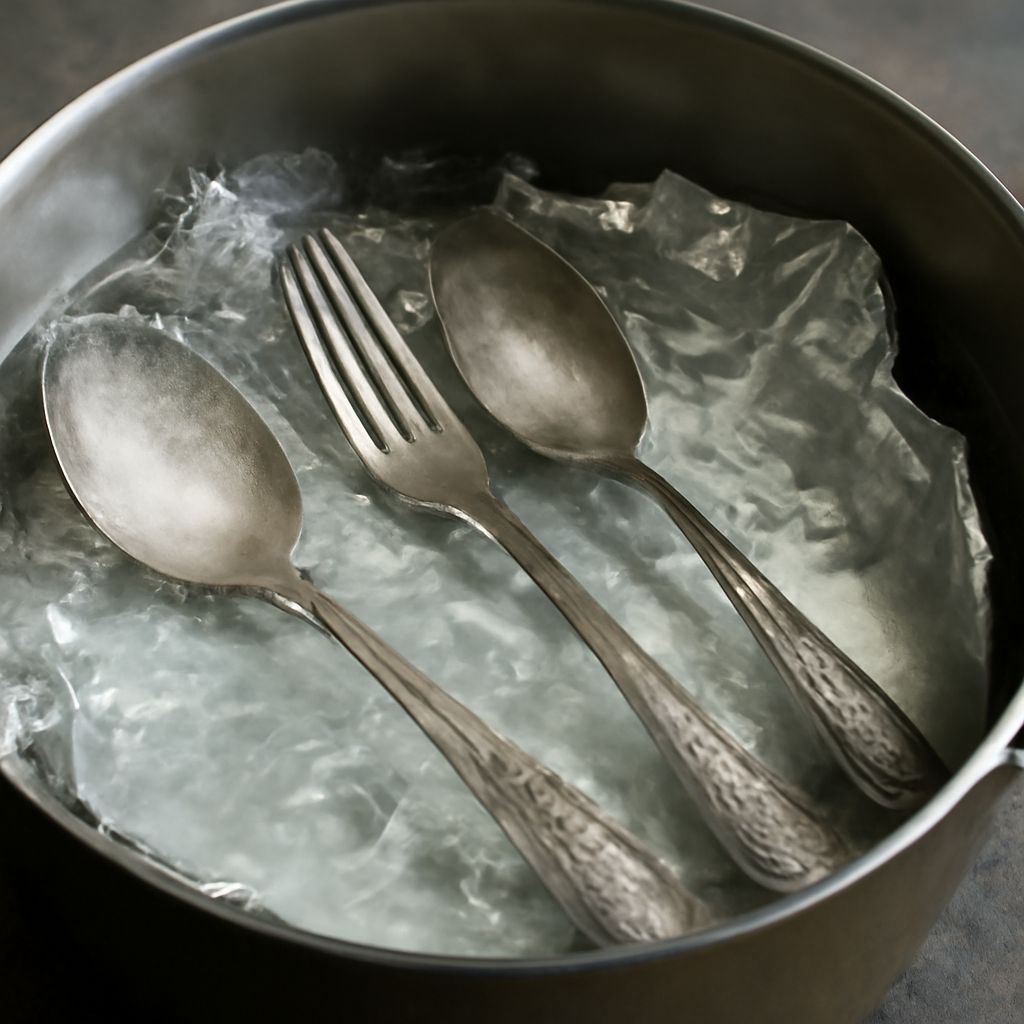
For solid sterling flatware only, an electrochemical bath can loosen heavy tarnish without rubbing:
- Line a nonmetal bowl with aluminum foil and add enough hot water to cover the piece.
- Stir in about 1 tablespoon of washing soda per quart of water.
- Place the clean sterling item in the bath so it touches the foil. Leave it for one to five minutes, checking after the first minute.
- Remove it when the tarnish loosens, rinse thoroughly with clean water, and dry immediately.
Do not use this bath for silver plate, jewelry, gemstones, enamel, oxidized finishes, pieces with glued parts, or unknown hollowware. Keep steel-bladed knives and items with soldered or enclosed sections out of the bath. If the finish does not improve after five minutes, stop rather than extending the treatment.
Flatware, Hollowware, and Silver Plate
For sterling flatware, wash first, then use a cloth for light tarnish or silver polish for heavier patches. Polish along the shape of the piece, using light pressure around engraving and knife edges. Rinse completely if the product instructions allow rinsing, and dry every piece before stacking.
For plated flatware and hollowware, favor washing and brief, gentle cloth work. Avoid concentrated rubbing on rims, handles, raised decoration, and worn spots. Never leave hollow pieces submerged unless the manufacturer specifically permits it; water can remain inside and cause staining or damage at seams.
Remove Tarnish from Jewelry: Protect Stones, Settings, and Plating
Set Stones, Plated Jewelry, and Intentional Patina
To remove tarnish from jewelry with no stones, wash it first and use a silver cloth on exposed metal. For chains, draw the cloth gently along each section instead of pulling hard on links. A cotton swab can reach around a setting, but do not push fibers under a stone or prong.
For jewelry with set stones, avoid silver dips, electrochemical baths, soaking, and household recipes. Use a barely damp, soapy cloth on the metal, then wipe with a clean damp cloth and dry immediately. Keep water away from glued settings and porous stones. If a stone moves, a prong catches the cloth, or the finish becomes cloudy, stop cleaning and have the piece inspected.
Plated jewelry needs especially light contact. If polishing exposes a warmer-colored metal, stop; the silver layer is wearing through. Jewelry with an intentional blackened finish should be cleaned only on areas meant to shine, leaving recessed patina untouched.
Dry, Store, and Slow Retarnishing
After cleaning, check every crevice, clasp, hinge, and hollow section for moisture. Store completely dry silver separately in a soft, tarnish-resistant pouch or closed container. Anti-tarnish strips can help, but avoid direct contact between the strip and jewelry.
Keep silver away from rubber, wool, cardboard, perfume, hairspray, chlorine, and damp bathrooms. Put jewelry on after cosmetics and fragrance have dried, and wipe it with a soft cloth after wearing. Frequent gentle cleaning is safer than waiting until heavy tarnish requires aggressive polishing.