
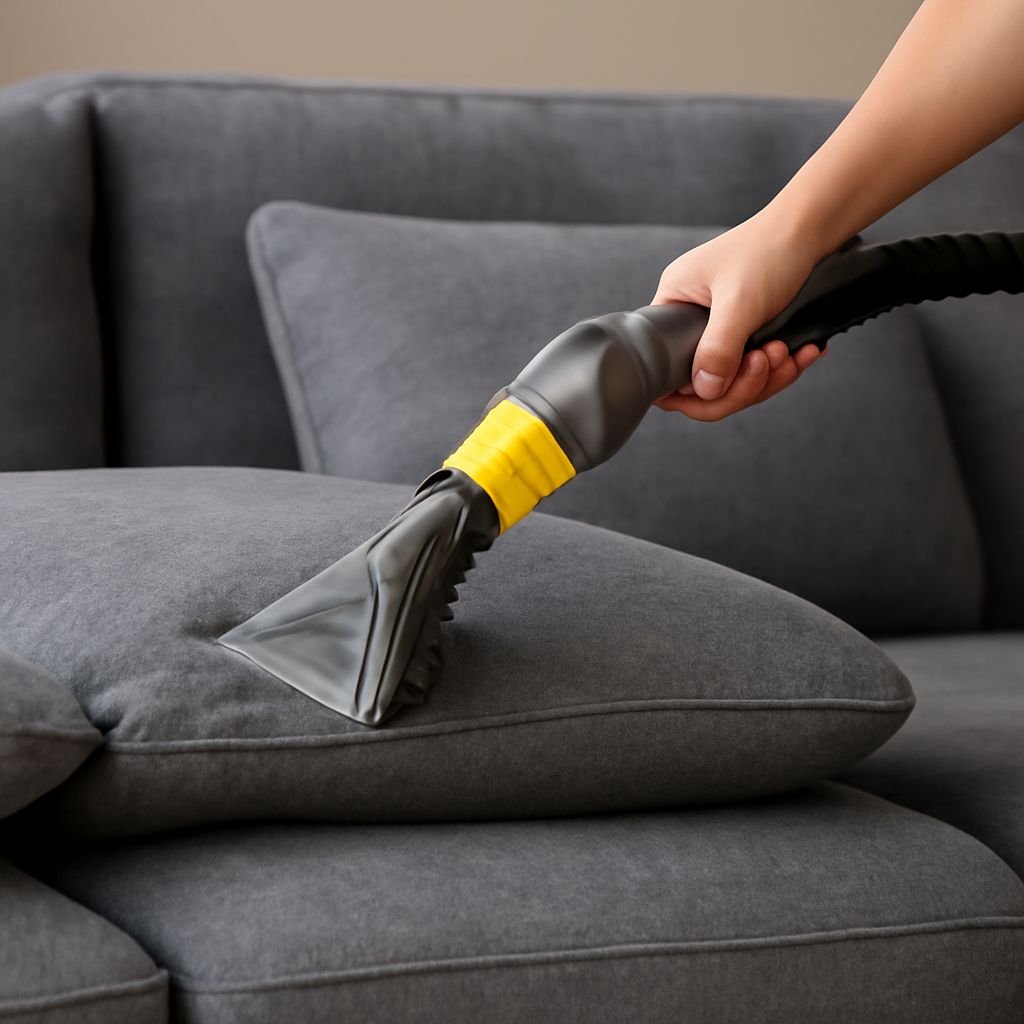
How to clean couch cushions depends on the upholstery code, cover construction, and filling. Start by checking the care label, vacuuming loose debris, and testing any solution on a hidden area. Then use the least moisture needed, clean the entire fabric panel evenly, and dry the filling completely before replacing the cushion.
Never assume a removable cover is machine washable. The cover, seams, backing, and insert may require different handling. If the label is missing, use a low-moisture method or consult an upholstery professional before saturating the cushion.
How to Clean Couch Cushions: Read the Care Code and Inspect
Look for a tag beneath the cushion, along a seam, or under the sofa frame. Upholstery codes usually mean:
- W: Water-based cleaning products are permitted.
- S: Use a solvent-based upholstery cleaner only. Avoid water.
- W/S or SW: Either water-based or solvent-based products may be suitable, subject to the manufacturer’s instructions.
- X: Vacuum or brush only. Professional cleaning may be the safest option.
Inspect the fabric for loose threads, weakened seams, fading, water marks, or damaged backing. Check the filling too. Foam can hold moisture in its center. Fiberfill may mat or clump. Feather and down need repeated fluffing so damp sections do not remain compressed. Mixed fills, such as foam wrapped in fiber or down, should be treated according to the component that dries most slowly.
Vacuum every surface with an upholstery attachment, including the underside, piping, seams, and the area beneath the cushion. Use a crevice tool carefully around welting. Remove crumbs and hair before adding moisture, because wet debris can spread through the fabric.
For any water- or solvent-based method, test an inconspicuous section first. Apply a small amount to a white cloth, dab the hidden fabric, and wait until it dries. Check for dye transfer, lightening, stiffness, texture changes, or a visible ring. Do not continue if the test causes damage.
How to Clean a Couch Cushion With a Removable Cover
- Remove the insert carefully. Unzip the cover without pulling the fabric or forcing a tight filling through the opening. Photograph the cushion first if the cover has a specific orientation.
- Read the cover’s cleaning instructions. Machine washing is acceptable only when the care label permits it. If washing is allowed, close the zipper, use cool water, mild detergent, and a gentle cycle. Do not use bleach unless the label specifically permits it.
- Pretreat stains according to the code. Scrape off dried material with a dull edge, then blot rather than rub. For a W-coded cover, dab with a small amount of approved upholstery solution. For an S-coded cover, use the recommended solvent and provide ventilation.
- Clean evenly. If the whole cover needs cleaning, work from seam to seam instead of treating only the visible spot. Overlap each section slightly to prevent clean borders and water rings. Keep the fabric damp, not soaked.
- Rinse or extract when appropriate. For water-safe fabric, remove detergent residue with a lightly damp white cloth or an upholstery extractor. Make several slow suction passes rather than flooding the cover. Do not rinse an S-coded cover with water.
Place the cover flat or hang it only as the care label directs. Do not force a damp cover over the insert. A wet cover can trap moisture against foam, stretch out of shape, or develop mildew odors.
If the cover is not washable, clean it on a flat, absorbent surface using the code-approved low-moisture method. Avoid soaking fabric around the zipper, because moisture can migrate into the insert even when the cover is removable.
Cleaning Couch Cushions With Fixed Upholstery
Fixed cushions need controlled, section-by-section cleaning. Vacuum first, then remove surface stains using a product compatible with the care code. Blot grease or liquid spills with white towels; rubbing can push the stain deeper and roughen the fibers.
For W-coded fabric, apply upholstery foam or a small amount of diluted cleaner to a cloth or brush rather than pouring it onto the cushion. Work gently from the outside of a spot toward the center. After pretreatment, clean the full panel from seam to seam, including the piping, so the surrounding fabric dries consistently.
For W/S fabric, choose the method that matches the manufacturer’s directions and the test result. Use only a small amount of water. For S-coded fabric, apply an upholstery solvent to a cloth, transfer it sparingly, and maintain ventilation. Never substitute water for solvent on solvent-only upholstery.
An extractor can help with water-safe fixed cushions, but moisture control matters more than the amount of solution. Use short spray bursts, immediate suction, and multiple dry passes. The cushion should feel slightly damp, not wet or heavy. Avoid steam cleaning unless the fabric and sofa manufacturer specifically approve it; heat and moisture can damage adhesives, backing, or foam.
Do not use water or liquid cleaners on X-coded upholstery. Vacuum thoroughly and brush the fabric according to its care instructions. Persistent stains, dye transfer, or strong odors are signs to stop rather than repeatedly wetting the cushion.
Dry and Reshape Every Cushion
Drying is part of the cleaning process. Stand removable cushions on their edges in a well-ventilated room, leaving space between them. Aim a fan across the fabric and rotate each cushion periodically. Avoid high heat from hair dryers, radiators, or direct sunlight, which can shrink fabric, fade color, or damage foam.
Foam inserts should be dried on all sides. Press a clean towel against wet areas to remove surface moisture, then allow airflow to reach the center. Dense foam commonly needs 24 to 48 hours, and longer if it was heavily wetted. Do not put it back inside the cover while the center feels cool, heavy, or damp.
Fiberfill usually dries faster, but it can form compressed lumps. Turn and knead the cushion gently as it dries, then restore its shape by pushing filling toward thin corners. Feather or down inserts need frequent shaking and hand-fluffing to separate clumps. They may require 24 to 72 hours or more, depending on humidity and how much moisture they absorbed.
For mixed fills, use the longest drying time required by the foam, fiber, feather, or down component. Before reassembly, check the seams, corners, and center for dampness. The finished cushion should feel evenly filled, hold its shape, and have no cool spots, detergent residue, musty odor, or visible drying rings.