
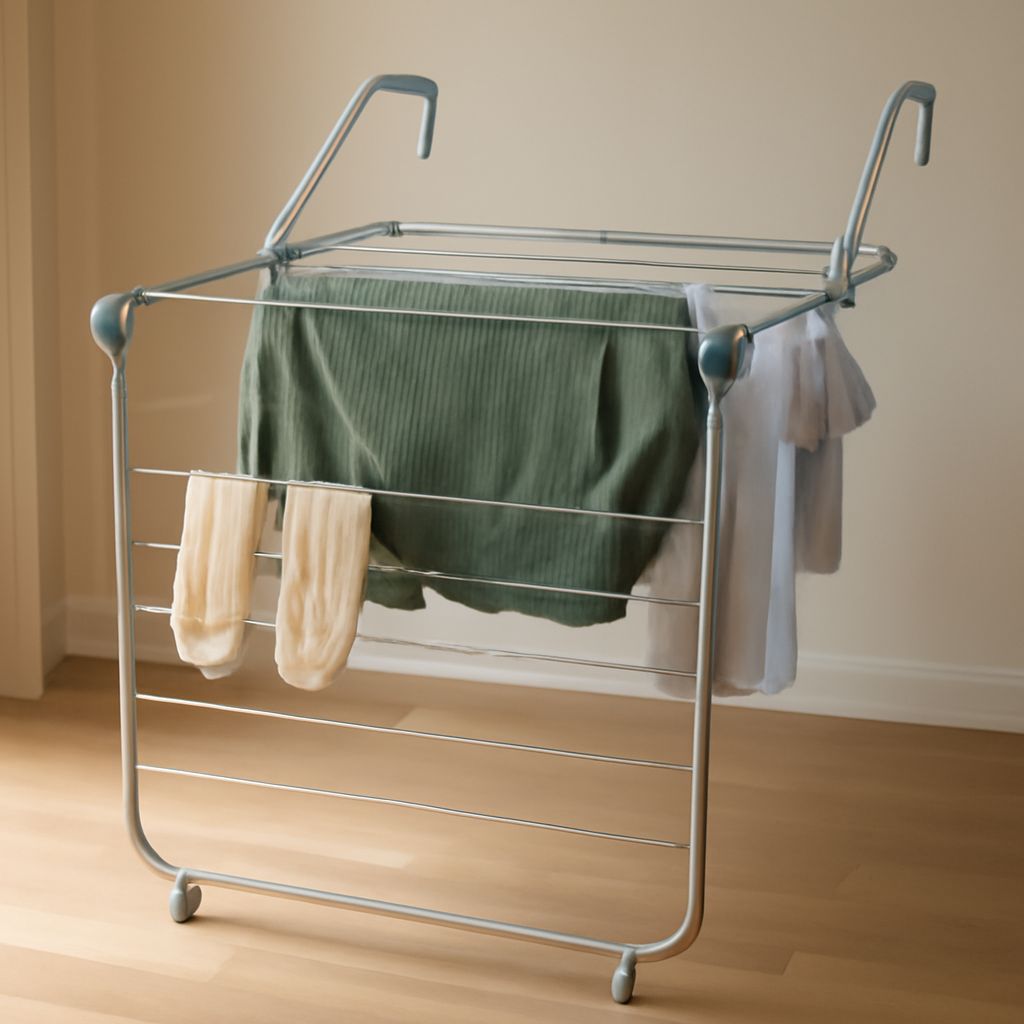
To learn how to air-dry clothes quickly, remove as much water as possible before hanging, then give each item space, airflow, and moderate warmth. The fastest setup is usually a high-spin cycle followed by a rack, line, or hangers in a dry, ventilated room.
These steps work for everyday shirts, trousers, towels, underwear, and delicate garments. They also help you avoid stretched shoulders, musty smells, stiff fabric, and damp seams.
Remove Water Before Hanging: Spin and Press
Water removal has the biggest effect on drying time. Run the finished load through an additional spin cycle if the fabric care label and washing machine allow it. A second spin is especially useful for towels, jeans, sweatshirts, and other dense items.
- Separate heavy and light items. Take out thick towels or jeans so they do not keep lighter clothes pressed together.
- Shake out each garment. This loosens twisted fabric and opens folds before you hang it.
- Press delicate items in a towel. Lay a silk, wool, or fine-knit garment flat on a clean towel. Roll the towel and press gently to transfer water. Do not wring it.
- Untangle cuffs, pockets, and sleeves. Trapped water in these areas can add hours to drying time.
Do not overload the washer before spinning. A tightly packed load may retain more water because the drum cannot distribute the fabric evenly. For garments that cannot tolerate a fast spin, press out water gently instead of twisting the material.
Drying Clothes Without a Dryer: Choose a Rack or Line
The goal when drying clothes without a dryer is to create one layer of fabric with air moving around it. Choose the setup that gives you the most space and the driest surrounding air.
- Drying rack: Use a folding rack for most indoor loads. Its multiple bars suit shirts, trousers, towels, and underwear. Leave it in a room with ventilation rather than a damp bathroom.
- Hangers: Use sturdy hangers for shirts, blouses, dresses, and lightweight trousers. They preserve shape and keep fabric off crowded rack bars.
- Clothesline: Use an outdoor line when the weather is dry and breezy. An indoor line also works if the room has good ventilation and enough clearance.
- Towel: Use a clean, absorbent towel to press water from delicate clothing or to lay sweaters flat. Replace a saturated towel with a dry one.
- Fan: Place a fan so air crosses the garments, not just the wall behind them. A fan helps most in still rooms or with thick fabrics.
- Dehumidifier: Run one in a closed room when outdoor air is humid or indoor windows begin to fog. It removes moisture from the air while clothes release it.
Indoors, choose a warm room away from cooking steam and showers. Open a window slightly when outside air is drier, or use an exhaust fan. Outdoors, check for rain, heavy dew, and high humidity. Bright sun speeds drying but can fade dark or brightly colored fabric, so shade is safer for sensitive clothes.
Position a rack at least a few centimeters from walls and furniture. Avoid placing wet clothing directly on radiators or near open heaters. High, concentrated heat can shrink fibers, damage elastic, or create a safety hazard.
How to Air-Dry Clothes Evenly by Garment Type
Hang clothing so its heaviest wet areas receive support and its thickest sections are exposed to air. Reshape items while they are damp; creases become harder to remove after drying.
- Shirts and blouses: Put them on a hanger, fasten the top button, and spread the collar and sleeves. Leave room between the hanger and the next garment.
- Trousers and jeans: Hang them from the waistband with clips, or use a hanger designed for trousers. Pull out the pockets and open the fly. For faster drying, turn thick jeans inside out halfway through.
- Sweaters and knits: Lay them flat on a rack or clean towel. A wet knit can stretch at the shoulders if hung from a narrow hanger.
- Towels and heavy bedding: Spread them over several bars or a strong line rather than folding them into a thick doubled layer. Support heavy items across two points to prevent stretching.
- Underwear, socks, and small items: Clip them separately with space between pairs. Turn thick socks inside out so the toe and heel are exposed.
- Activewear and elastic garments: Reshape them and hang them in shade. Avoid very hot surfaces, which can weaken elastic fibers.
Keep garments from touching each other. On a rack, leave roughly 5 centimeters between larger items and more space for towels or jeans. If fabric overlaps, the covered section may remain damp even when the outside feels dry.
How to Dry Clothes Fast Without a Dryer: Add Airflow and Warmth
This is how to dry clothes fast without a dryer: extract water first, arrange a single layer, then move dry air continuously across the fabric.
- Set the rack near moving air. Place it near an open window, ventilation fan, or portable fan, while keeping clothing away from rain and direct drafts that blow items together.
- Use a fan safely. Aim the fan across the rack from about 1 to 2 meters away. Low or medium speed is usually enough. Rearrange clothing if the airflow only reaches one side.
- Add gentle warmth. A naturally warm, bright room or mild outdoor sun can shorten drying time. Do not use intense direct heat on delicate fibers.
- Lower humidity. Close the room door and run a dehumidifier if the air feels damp. In a dry climate, ventilation may work better than a dehumidifier.
- Turn thick garments. After one to two hours, turn trousers, towels, and sweatshirts so the hidden side faces the airflow. Rotate items on a line if one side remains shaded.
Light shirts may dry in about two to four hours in a warm, breezy room. Trousers and towels often need six to twelve hours, while dense loads may take longer indoors. Humidity, fabric thickness, spacing, and airflow matter more than the clock, so use touch as the final test.
Dry Clothes Without a Dryer: Check Seams and Waistbands
You can dry clothes without a dryer successfully when the thickest and least exposed sections are dry, not merely the outer surfaces. Check these areas before folding or putting garments away:
- Inside waistbands and elastic edges
- Side seams, hems, cuffs, and collars
- Pockets, pocket linings, and zipper areas
- The toe and heel of socks
- The center fold of towels and bedding
- Underarms and thick sweatshirt seams
Press each area between your fingers. A dry garment feels evenly light and fabric-like, without a cool, heavy, or clammy patch. If a seam still feels damp, spread the garment wider, turn it inside out, and return it to the airflow. Fold clothes only when those hidden areas are fully dry; otherwise, trapped moisture can create a musty smell.