
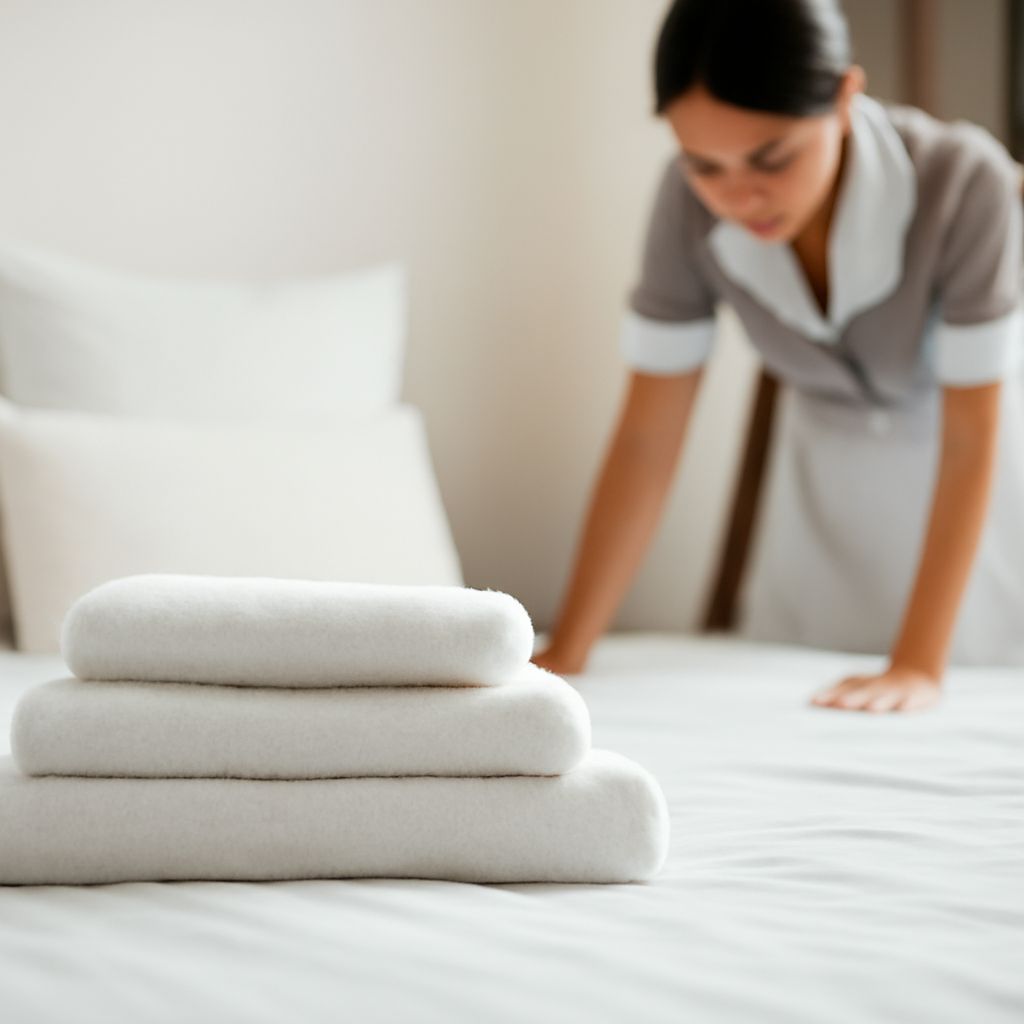
A housekeeper typically cleans and resets rooms, manages laundry or linens, replenishes supplies, and reports problems. The exact scope depends on whether the work covers a private home, hotel, short-term rental, office, or another property.
This practical guide separates routine housekeeping from tasks that require extra time, training, equipment, or a separate agreement.
Housekeeping Duties: The Core Checklist for Every Visit
Most visits follow a repeatable sequence. The aim is to leave each area clean, functional, supplied, and ready for its next use.
- Clean surfaces: Dust furniture, wipe counters, sanitize high-touch points, clean mirrors, and remove visible marks.
- Clean floors: Vacuum carpets and rugs, sweep hard floors, and mop them using the appropriate product.
- Reset rooms: Make beds, arrange cushions, return items to their usual locations, and clear rubbish.
- Clean kitchens: Wash dishes or load the dishwasher, wipe appliances and worktops, clean the sink, and check food-preparation areas.
- Clean bathrooms: Scrub toilets, sinks, showers, and tubs; polish fixtures; clean mirrors; and replace used towels.
- Handle laundry or linens: Wash, dry, fold, iron, or change bedding when included in the service.
- Restock supplies: Check toilet paper, soap, paper products, cleaning materials, and guest or household essentials.
- Report issues: Note leaks, damage, stains, broken equipment, missing items, pests, or safety concerns rather than attempting unapproved repairs.
- Organize lightly: Group similar items, clear clutter from working surfaces, and maintain an agreed system without discarding possessions.
A good checklist should identify which rooms are included, what “clean” means, where supplies are stored, and who approves additional work.
A Housekeeping Duties List by Frequency
Frequency changes with occupancy, household size, foot traffic, and the type of property. The following schedule is a realistic starting point.
- Every visit or daily: Empty bins, clean high-use surfaces, sanitize touchpoints, tidy shared areas, clean kitchen and bathroom surfaces, vacuum or sweep busy floors, and reset beds or guest rooms.
- Several times a week: Mop floors, clean shower and tub areas thoroughly, change household or guest linens, wash frequently used towels, and dust furniture or accessible fixtures.
- Weekly: Dust skirting boards and reachable ledges, vacuum upholstery, clean under movable furniture, wipe cabinet fronts, clean interior doors, and refresh less-used rooms.
- Every one to four weeks: Clean reachable windowsills, vents, light fixtures, appliance exteriors, baseboards, and detailed bathroom or kitchen areas. The interval depends on dust, moisture, and use.
- Seasonally or periodically: Rotate mattresses if appropriate, clean inside selected appliances, wash curtains or removable covers, organize storage areas, and prepare rooms for seasonal changes.
- When requested: Clean inside ovens, refrigerators, cupboards, and windows; handle stain treatment; or complete move-in, move-out, and post-event cleaning.
Periodic work should be scheduled separately from standard visits when it adds substantial time. A housekeeper should not be expected to complete a deep-cleaning project during a routine appointment without adjusting the schedule or agreement.
What Housekeeper Duties Usually Include: Rooms, Supplies, and Reporting
Room-specific work makes a general checklist easier to apply.
- Bedrooms: Change or straighten bedding, dust furniture, vacuum floors, empty bins, and keep bedside and storage areas orderly.
- Living areas: Dust shelves and electronics carefully, vacuum upholstery, clean floors, arrange cushions, and return everyday items to their designated places.
- Kitchens: Wash dishes, sanitize food-contact surfaces, clean the stovetop, wipe cabinet fronts, empty rubbish, and check that consumables are available.
- Bathrooms: Remove soap residue, clean sanitary fixtures, disinfect appropriate surfaces, polish mirrors, mop floors, and replace towels or toiletries.
- Laundry areas: Sort items according to instructions, use the correct settings, fold or hang finished laundry, and report damaged or heavily stained items.
Supply duties include tracking cleaning products, gloves, bags, paper goods, toiletries, and replacement linens. The housekeeper may create a shopping list, use an approved purchasing account, or notify the client or manager before supplies run out. Responsibility for buying supplies should be agreed in advance.
Reporting is part of reliable service. A housekeeper should communicate completed work, unavailable rooms, missing supplies, unusual stains, damage, maintenance concerns, and anything that prevented a task from being completed.
Housekeeping Skills and Duties for Reliable Work
Effective housekeeping requires more than speed. The most useful skills combine practical cleaning knowledge with consistency and good judgment.
- Cleaning technique: Know which products and tools suit glass, stone, wood, metal, fabric, and other surfaces. Follow product labels and avoid mixing chemicals.
- Time management: Prioritize kitchens, bathrooms, high-touch surfaces, and occupied rooms before lower-risk detail work.
- Attention to detail: Notice dust on edges, hair in bathrooms, streaks on mirrors, low supplies, and items that are out of place.
- Safe working practices: Use gloves when needed, handle equipment correctly, keep walkways clear, and report hazards promptly.
- Confidentiality and respect: Protect household, guest, and business information. Handle personal belongings carefully and avoid unnecessary inspection.
- Communication: Confirm priorities, ask before changing an organization system, and provide clear updates about damage or extra work.
- Physical organization: Work methodically from cleaner areas to dirtier ones, from high surfaces to low surfaces, and from one room or zone to the next.
These housekeeping skills and duties support dependable results, but they do not automatically include childcare, personal care, driving, cooking, or property maintenance.
Housekeeping Duties and Responsibilities by Setting and Scope
The same job title can describe different work arrangements. Setting, occupancy, and written expectations determine the actual role.
- Private homes: Work may include recurring cleaning, laundry, bed-making, kitchen resets, light decluttering, and household supply checks. The client usually defines preferred products, storage systems, pets, privacy rules, and areas that are off limits.
- Hotels and hospitality: Work commonly follows room standards and checklists. Duties may include making beds to specification, replacing linens, cleaning guest bathrooms, replenishing amenities, checking room condition, and reporting lost property or maintenance issues.
- Short-term rentals: Turnover work is often deadline-driven. The housekeeper may reset the entire property, inspect for damage, restock guest supplies, confirm linen counts, and report missing or broken items between stays.
- Offices and commercial spaces: Priorities may include floors, washrooms, kitchens, bins, shared surfaces, and supply rooms. Access rules, security procedures, and cleaning schedules often matter as much as the task list.
Childcare is a separate responsibility. Supervising children, preparing bottles or meals, transporting them, and managing routines belong to a nanny or childcare arrangement unless specifically added.
Care work is also distinct. Bathing, dressing, medication support, mobility assistance, and personal supervision require clear agreement and, in some situations, relevant training. A housekeeper should not assume these duties from a request to “help around the home.”
Repairs, electrical work, plumbing, pest treatment, high-window cleaning, mould remediation, carpet extraction, and other heavy specialty work need separate authorization, equipment, or qualified professionals. Define the task, price, timing, and responsibility before adding it to the regular housekeeping schedule.