
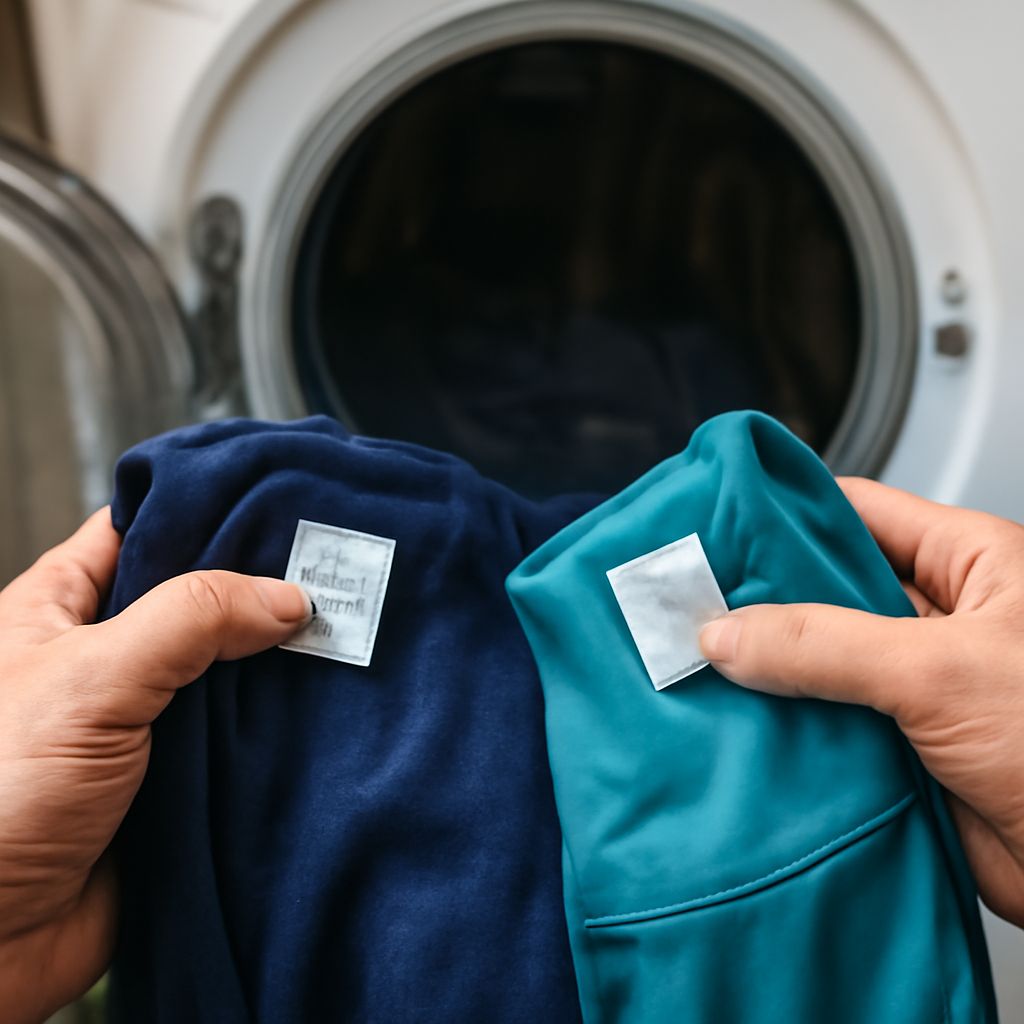
Does polyester shrink? Usually, not from a normal wash. Well-finished polyester is dimensionally stable, so a garment washed at the care-label temperature typically changes very little. The bigger risk is sustained high heat, which can relax the fabric, distort its construction, or alter its fit.
So, can polyester shrink? Yes, but usually not like cotton. A 100% polyester garment may show negligible change or roughly 0–2% dimensional change under normal care. Knits, poorly stabilized fabrics, and polyester blends can change by a few percent, particularly after hot tumble drying.
How Much Does Polyester Shrink in a Normal Wash?
Typical Fiber Stability
Polyester fibers are manufactured from a thermoplastic polymer and are often heat-set during production. This process stabilizes the yarns and fabric, helping them retain their dimensions through repeated washing.
Cold or warm water alone usually does not cause noticeable permanent shrinkage in a finished polyester garment. A machine wash at approximately 30–40°C (86–104°F), when allowed by the care label, is unlikely to make a shirt suddenly become smaller.
However, “polyester” describes the fiber, not every detail of the fabric. Manufacturing tension, heat-setting quality, dyeing, finishing treatments, and garment construction all affect dimensional stability. A tightly woven, well-finished fabric may barely change. A loosely knitted fabric may relax and measure differently after its first wash.
Relaxation, Distortion, and Fit
Some apparent polyester shrinkage is actually relaxation. During knitting, weaving, dyeing, and sewing, fabric can be held under tension. Washing releases some of that tension, allowing the material to contract in one direction or spread in another.
This is not the same as predictable cotton-like fiber shrinkage. A polyester shirt may become slightly shorter because its knit structure compacts. It might also become wider, twist at the seams, or lose its original drape. Those changes affect fit even when the polyester fibers themselves have not significantly contracted.
Agitation can contribute to distortion, especially in lightweight knits, fleece, brushed fabrics, and garments with loose seams. Stretching a wet garment over a hanger can create the opposite problem: shoulder points, necklines, or hems may become longer rather than smaller.
Can Polyester Shrink With Heat?
Temperature, Dryers, and Finishes
Heat is the main reason polyester changes size or shape. A short, low-temperature drying cycle is generally safer than prolonged exposure to high heat. Hot air can relax manufacturing tension, compact some fabrics, and set wrinkles or distortions in place.
High dryer settings can expose fabric to temperatures above 60°C (140°F), depending on the appliance, load, and cycle. The fabric may be exposed to that heat repeatedly while tumbling. This combination is more likely to change fit than a brief warm wash.
Polyester usually does not melt in a household dryer, but it can soften, flatten, pucker, or develop a shiny, pressed appearance. Heat can also damage elastic fibers, adhesive elements, printed designs, coatings, and delicate trims before the main fabric appears badly damaged.
Finishes matter as well. Water-repellent coatings, brushed surfaces, pleats, and permanent-press treatments may respond differently to heat. A garment that keeps its size may still lose texture or shape if it is dried too hot.
Knits, Weaves, and Blends
Knit polyester is generally more vulnerable to fit changes than woven polyester because loops can relax and compact. Jersey, ribbing, fleece, and sweater-like constructions may become shorter, wider, or denser after washing and drying.
Woven polyester, such as fabric used for shirts, trousers, and jackets, often holds its dimensions better. Even so, a loosely woven or inadequately stabilized fabric can distort when wet or exposed to high dryer heat.
Blend composition is equally important. A 65% polyester and 35% cotton shirt can shrink because the cotton portion is more responsive to water and heat. The final change depends on the ratio, fabric construction, and whether the cotton was pre-shrunk. Polyester may limit the total change, but it cannot prevent the cotton fibers from responding.
Blends containing rayon or viscose may also change more than pure polyester. Garments with elastane can lose recovery when exposed to repeated high heat, making them feel looser or tighter even without major length shrinkage.
Polyester Shrinkage: Washing Versus Drying
Washing Effects
For most polyester garments, washing causes less dimensional change than drying. Water can relax the fabric, while detergent and agitation may encourage stretching, twisting, or surface wear. A gentle cycle reduces mechanical stress.
Use the care label as the controlling instruction. If the label permits machine washing, choose cold or warm water rather than hot water. Select a gentle cycle for knits and lightweight fabrics, avoid overloading the drum, and remove the garment soon after the cycle ends.
Do not wring or aggressively twist wet polyester. Press excess water out gently, then reshape the garment while it is damp. This helps correct small distortions before they become fixed during drying.
Drying Effects
Drying is where unwanted size change most often occurs. A long, hot tumble-dry cycle combines heat, movement, and repeated compression. That combination can shorten a knit, flatten a textured surface, or set a twisted seam.
When the care label allows tumble drying, use low heat and remove the garment while it is slightly damp. Finish drying on a flat surface or a suitable hanger, depending on the garment’s weight and construction. Heavy knits should usually dry flat so their wet weight does not stretch the shoulders.
Air drying is the lowest-risk option for preserving polyester’s shape. Keep the garment away from direct high heat, radiators, and hot irons unless the label specifically permits them. If ironing is necessary, use the lowest appropriate setting and place a pressing cloth between the iron and fabric when recommended.
Does Polyester Shrink When Washed? Care Steps
Follow the Care Label
- Check the fiber content and care symbols before washing. A polyester blend should not be treated as pure polyester.
- Choose the listed water temperature. If the label gives a choice, cold or warm water is safer than hot water.
- Use a gentle cycle for knits, fleece, stretch garments, and loose constructions. Fasten zippers and turn printed garments inside out.
- Choose low-heat tumble drying only when permitted. Otherwise, reshape the garment and air-dry it.
- Remove the garment promptly. Do not leave it compressed in a hot dryer after the cycle ends.
Measure and Fit-Check
Measure the garment before its first wash if its fit is important. Lay it flat without stretching and record the chest or waist width, shoulder width, body length, sleeve length, or inseam. Use the same points after washing and drying.
Compare the measurements only when the garment is fully dry and arranged in the same position. A small change in one area may indicate relaxation rather than overall shrinkage. Check whether seams remain straight, hems lie flat, and stretch areas recover after gentle handling.
If the garment feels tighter after washing, inspect its fabric and construction before assuming the fibers shrank. Heat-related compaction, seam distortion, and a cotton or rayon component may explain the fit change. Adjust the next wash by lowering the temperature, reducing agitation, and replacing high-heat drying with air drying.