
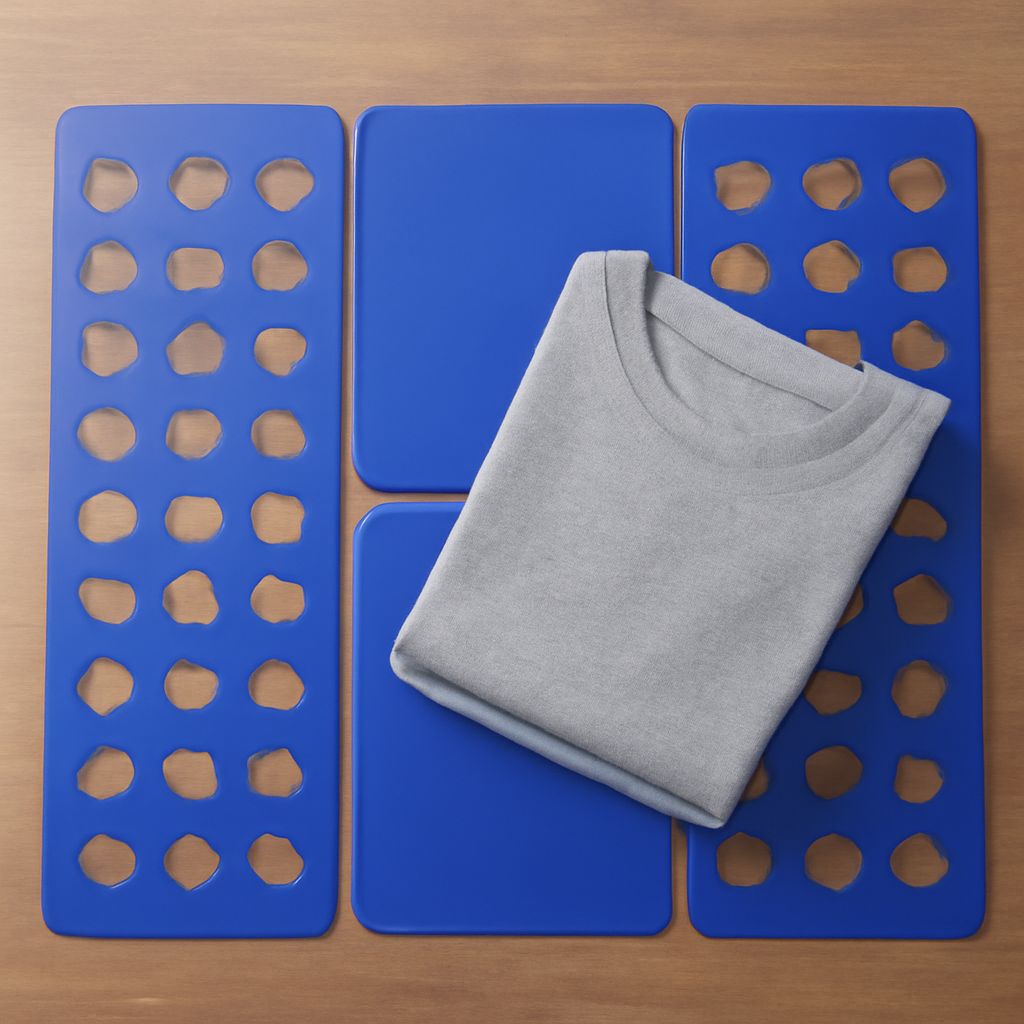
A laundry folding machine automates part of the finishing process, but no single model folds every garment and linen format. Commercial folders work best with predictable items, such as sheets, towels, napkins, uniforms, or other standardized loads.
Household devices take a different approach. They usually assist with one garment at a time and require more hands-on placement. The right choice depends on textile types, daily volume, available labor, and floor space.
What Does a Laundry Folding Machine Do? Automatic vs. Assisted
An automatic folder receives a correctly oriented item, measures or detects its position, and creates programmed folds with belts, rollers, air jets, blades, clamps, or folding plates. The finished item exits onto a conveyor or stacking area.
Commercial automation is usually designed around a narrow product range. A sheet folder may accept flat linen but reject fitted sheets, bulky blankets, or irregular garments. A towel folder may handle several towel sizes but struggle with very thick terry goods. Sensors and software improve repeatability, but they cannot overcome incompatible dimensions.
An assisted device reduces the physical effort rather than eliminating the operator. The user places a shirt, towel, or pair of trousers on a guide, then activates a folding board or motorized mechanism. This type of folding laundry machine suits low-volume users who want neater results without installing industrial equipment.
Commercial Folder Types: Flatwork Ironer-Folders, Towel Folders, and Garment Folders
Flatwork ironer-folders are built for large, flat textiles. Typical inputs include sheets, duvet covers, tablecloths, and some pillowcases. A feeder aligns the item before heated rollers press and dry it. Folding sections then create one or more lengthwise and crosswise folds. These systems need consistent edges and careful feeding.
Towel folders handle terry towels, hand towels, washcloths, bath mats, and selected small flat goods. Belts, air knives, or mechanical folding plates divide the item into programmed sections. Their mechanisms accommodate more thickness than a sheet folder, but size and weight limits still apply.
Garment folders process selected clothing, including shirts, trousers, jackets, uniforms, or workwear. They may use conveyors, clamps, formers, and sensors to position each item. Garments often require more orientation and profile control than flat linen. Buttons, zippers, hoods, heavy fabric, and unusual shapes can reduce compatibility.
A commercial laundry folder machine should therefore be matched to the dominant textile, not chosen as a general-purpose appliance. Some facilities need separate modules or machines for flatwork, towels, and garments.
Items, Loading, Programming, Throughput, and Operator Work
Loading is a major performance factor. A flatwork feeder may require an operator to clip or align one edge of a sheet. A towel folder may accept pieces from a conveyor but still require separation and orientation. A garment folder typically needs each item presented in a particular position.
Programming usually covers fold dimensions, fold sequence, item size, speed, and stacking preferences. More advanced systems use sensors to identify length or detect misfeeds. Operators still remove tangled pieces, clear jams, reload carts, and separate items the machine cannot process.
Throughput varies by model, textile, fold pattern, and feeding method. A commercial line can process hundreds of standardized pieces per hour when paired with efficient sorting and feeding. A household device normally handles one item at a time, often with manual placement before each cycle.
Output consistency is one of the main reasons to automate. Commercial equipment produces uniform folds and stacks when items are compatible and correctly fed. It also reduces repetitive folding labor. However, a folder does not replace sorting, washing, drying, quality checks, stain handling, or final packing.
Household Folding Devices: Choosing a Clothes Folding Machine
A clothes folding machine for home use is generally smaller and less automated than a commercial folder. Some models use a folding board, templates, or motorized panels. Others accept a limited set of garments and rely on the user to smooth and position each item.
These devices are most useful for people who fold frequent loads of similar clothing, want consistent stacks, or find repeated folding physically difficult. A consumer clothing folding machine may work well with T-shirts, shirts, trousers, towels, and basic linens while excluding socks, underwear, fitted sheets, bulky sweaters, or delicate items.
Check the accepted textile sizes, maximum thickness, cycle time, loading steps, and required clearance. A device that folds one shirt neatly may still save little time if every shirt needs extensive alignment. For occasional household laundry, a manual folding board may provide similar results with less cost and maintenance.
Setup, Output, Footprint, Maintenance, and Value
Commercial folders need more than the machine’s listed dimensions. Plan for an infeed area, outfeed conveyor or stacking space, operator access, linen carts, and room to service belts and sensors. Depending on the model, installation may also require dedicated electrical service, compressed air, ventilation, or connection to an ironer.
Maintenance includes removing lint, cleaning sensors, inspecting belts and rollers, checking folding plates, and following lubrication or replacement schedules. Poorly maintained feeding components can cause skewed folds, jams, dropped items, and inconsistent stacks. Consumer devices usually need less service but still require cleaning and inspection of hinges, motors, and guides.
The best candidate depends on the operation:
- Home: Choose an assisted device when folding is frequent, physically demanding, or unusually time-consuming. Low laundry volume rarely justifies commercial equipment.
- Hospitality: Hotels and resorts with steady volumes of sheets, towels, and napkins can benefit from dedicated flatwork or towel folders, especially during daily room turnover.
- Healthcare: Facilities handling standardized sheets, patient garments, and uniforms should match each textile group to an approved folder and preserve required handling procedures.
- Laundry operations: High-volume laundries gain the most when feeding, sorting, stacking, and labor scheduling support the folder’s rated throughput.
Compare labor saved with purchase, installation, utilities, maintenance, training, and floor-space costs. Select the machine that matches the highest-volume textile category, then verify its loading requirements and output rate using your actual items. A folder is worthwhile when it removes a sustained bottleneck; it is a poor fit when most of the load falls outside its compatible formats.