
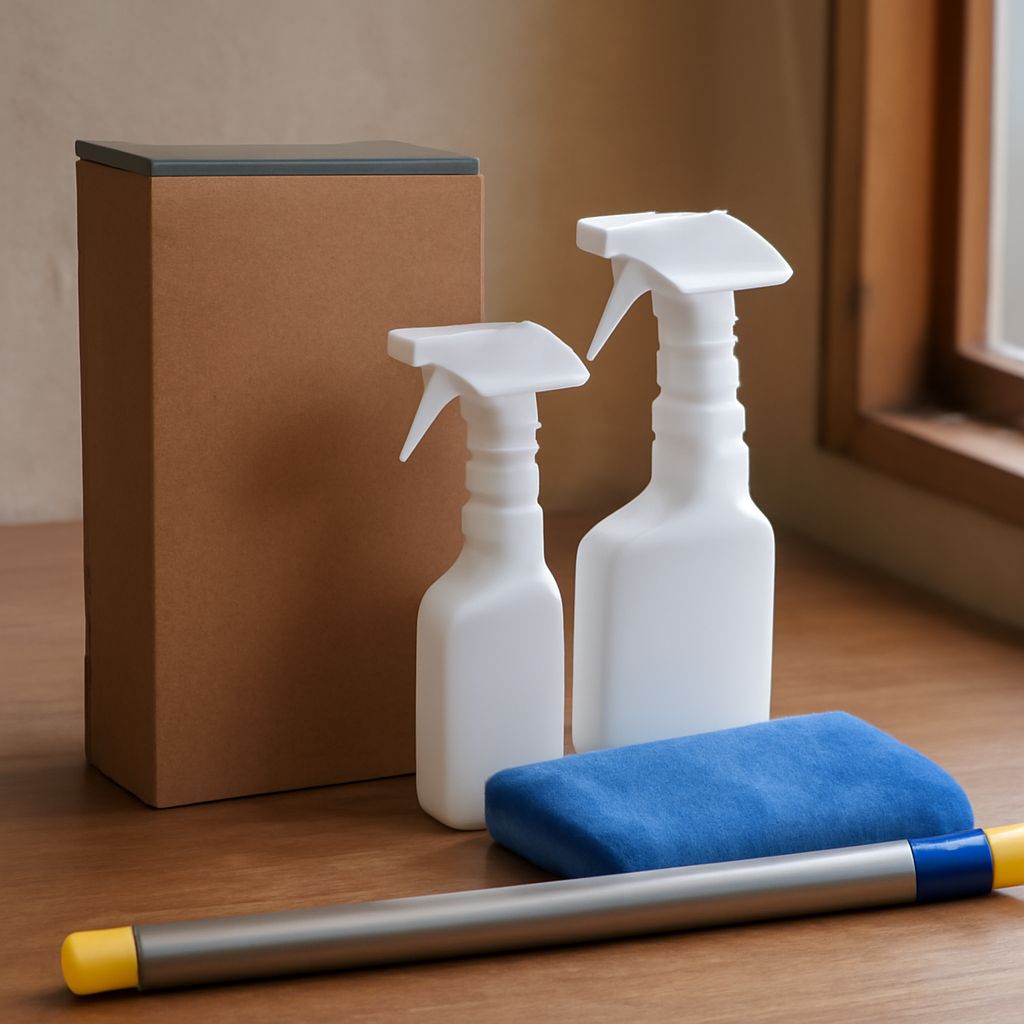
A wooden floor cleaner is a cleaner made to remove dust, grime, and light residue from wood floors without stripping the finish. For sealed hardwood, it should clean effectively, dry fast, and leave little or no sticky buildup. The best choice is usually one that matches your floor’s finish, your cleaning method, and how much residue you can tolerate.
In everyday use, hardwood floor cleaners are the same basic category, but they vary in formula, application, and finish. Some are spray-and-wipe products for quick touchups. Others are concentrates or mop solutions designed for regular floor care. The right product depends less on the label and more on whether your floor is sealed, unfinished, oiled, or waxed.
Wooden Floor Cleaner: Direct Answer
A wooden floor cleaner is a product designed to clean wood surfaces safely while preserving the floor’s finish. On sealed hardwood, it should lift dirt without leaving water marks, dulling the sheen, or weakening the protective layer.
For most homes, the safest answer is a pH-balanced cleaner made for sealed wood floors. That includes many hardwood floor cleaners sold as sprays, refill liquids, or mop concentrates. These are usually better than all-purpose cleaners, bleach, vinegar, or heavy degreasers, which can harm wood or finish over time.
If you want the simplest rule: use a cleaner labeled for wood floors, apply it lightly, and avoid oversaturating the surface. Wood is sensitive to excess moisture, so the product matters, but technique matters just as much.
How It Works and What Makes It Different
Wood floor cleaning products work by breaking up soil and oily film so it can be wiped away before it settles into the finish. The best formulas balance cleaning power with low residue and fast drying. That helps the floor look clean without becoming slippery or cloudy.
What makes one wooden floor cleaner different from another is usually the formula and the floor type it is meant for:
- Spray cleaners work well for small messes and regular spot cleaning.
- Mop solutions are better for larger areas and routine maintenance.
- Concentrates can be more economical, but they require correct dilution.
- Residue-free formulas are useful if your floor looks dull after repeated cleaning.
- Plant-based options can be appealing, but they still need to be safe for sealed wood.
The finish on the floor changes the cleaning choice. Sealed hardwood usually handles standard hardwood floor cleaners well. Unfinished, oiled, or waxed wood often needs a more specialized product because those surfaces absorb cleaner differently and can react to water or solvents.
Some products are marketed as wood floor cleaning products but are really general-purpose cleaners with a wood-safe claim. That can be fine for light cleaning, but the label should still clearly say it is suitable for hardwood or sealed wood. If the directions suggest a heavy soak, that is a warning sign for most wood floors.
Choosing Between Hardwood Floor Cleaners
Choose hardwood floor cleaners based on three practical questions: what kind of floor you have, how often you clean, and what result you want.
Match the cleaner to the finish
Sealed hardwood usually works best with a cleaner made for finished wood surfaces. If your floor is engineered wood with a sealed top layer, the same rule generally applies. If the wood is waxed, oiled, or unfinished, do not assume a standard spray is safe.
Choose the application you will actually use
If you clean crumbs and footprints often, a spray wooden floor cleaner is convenient. If you mop weekly, a diluted solution may be easier and more cost-effective. The best product is the one that fits your routine, because skipped cleaning creates more buildup than using a simple formula consistently.
Look for these useful qualities
- Low residue so the floor does not haze or feel sticky
- Fast drying to reduce water exposure
- Wood-safe ingredients that will not strip the finish
- Clear dilution instructions if the product is concentrated
- Neutral or mild scent if you clean frequently in closed rooms
Price is only part of the comparison. A concentrated product may cost more upfront but cover many cleanings. A ready-to-use spray may cost more per use, but it saves time and reduces measuring errors. For busy households, that convenience often matters more than bottle size.
Also check whether the product is meant for shine, deep cleaning, or maintenance. Some wood floor cleaning products add polish-like agents that can make floors look better at first, but those additives can also build up over time. If your floor already has a strong finish, a simple cleaner is often enough.
How to Use Wood Floor Cleaning Products
Use wood floor cleaning products sparingly. The goal is to clean the surface, not wet the floor. Excess liquid is the most common mistake, especially on seams, edges, and older boards.
- Remove loose dirt first with a microfiber dust mop or soft vacuum attachment.
- Apply the wooden floor cleaner as directed, usually by misting or lightly dampening a mop.
- Work in small sections so the floor does not sit wet for long.
- Wipe with the grain when possible for a more even finish.
- Let the surface dry completely before walking heavily on it.
For spot cleaning, spray a small amount onto the mop or cloth instead of flooding the floor. For larger areas, make sure the mop is damp, not dripping. If a product requires dilution, measure it carefully. Too much concentrate can leave streaks, while too little may not clean effectively.
Success cues are simple: the floor looks even, feels clean, and dries without haze or stickiness. Failure cues include cloudy patches, slick residue, raised edges, or darkened seams from too much moisture.
If you maintain the floor regularly, you usually need less product each time. Frequent light cleaning is better than waiting for heavy buildup and then using a stronger formula.
When to Use a Different Cleaner
Use a different cleaner if your floor is unfinished, waxed, oil-treated, or visibly damaged. Standard hardwood floor cleaners are made mainly for sealed wood and can behave poorly on more sensitive surfaces.
Switch if you notice any of these problems after cleaning:
- sticky or slippery residue
- cloudy streaks that keep returning
- dull patches that do not improve
- water discoloration around board edges
- finish wear that seems to get worse after cleaning
In those cases, the issue may not be dirt alone. It may be the wrong product for the floor finish, or too much cleaner being used. A gentle, finish-appropriate formula is usually better than trying to solve the problem with a stronger all-purpose cleaner.
If you are unsure whether the floor is sealed, test a hidden area first with a small amount of product and a barely damp cloth. If the finish reacts badly, stop and choose a cleaner made for that specific wood surface.
For most sealed floors, the best wooden floor cleaner is the one that cleans lightly, dries fast, and leaves the finish unchanged. That is the standard to use when comparing hardwood floor cleaners or any wood floor cleaning products you plan to keep in regular rotation.