
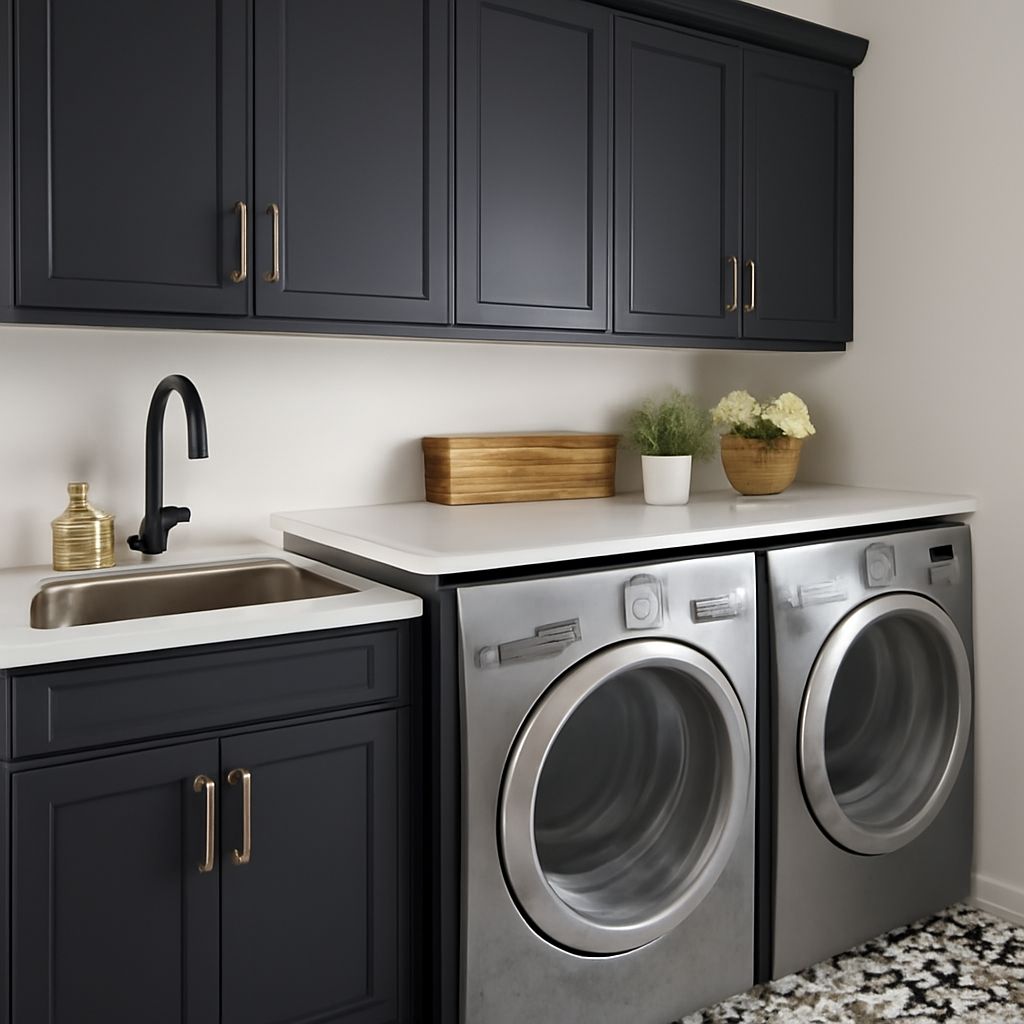
Good laundry room design starts with workflow, not wallpaper. The best laundry room decor ideas support appliance access, sorting, folding, hanging, and storage in that order.
Once the room works well, then the finishes can do their job. The right color, lighting, labels, and wall details make even a small utility space feel intentional and easier to use.
Plan the Layout and Workflow
Start with the machines and the movement around them. A good laundry room layout gives you enough clearance to open washer and dryer doors fully, pull out detergent, and move a hamper without blocking the walkway.
Check three things first: appliance placement, door swing, and aisle width. If the room is tight, a stacked washer and dryer can free floor space. In wider rooms, side-by-side machines with a counter above them often create the best folding zone.
Keep plumbing and venting simple whenever possible. Placing the washer near existing supply lines and drain hookups usually reduces cost and limits visual clutter. Dryers need proper venting and a clear path for maintenance, so avoid boxing them in too tightly.
Think in zones:
- Sort zone: a hamper, basket wall, or divided bins near the entry.
- Wash zone: washer, dryer, detergents, stain products, and supplies.
- Fold zone: a flat counter or table with enough depth to spread clothes.
- Hang zone: a rod, retractable line, or wall-mounted drying rack.
- Put-away zone: shelves or cabinets for clean towels and overflow items.
For laundry room layouts in narrow rooms, one-wall planning usually works best. Put machines on one side and storage above them, then add a fold-down surface or slim cart opposite if the aisle still stays comfortable. In square rooms, an L-shaped layout can separate washing from folding more clearly.
Shared laundry rooms need extra structure. Label baskets, assign shelf sections, and keep each person’s items in a defined spot. If more than one household uses the space, clear visual rules matter more than decorative extras.
Add Storage, Lighting, and Work Surfaces
Storage should make laundry faster, not harder to reach. Use the wall height above appliances before taking up valuable floor space. Open shelves work for frequent items, while closed cabinets hide visual clutter and help the room feel calmer.
A practical setup includes:
- detergent and stain treatment at arm height
- a shelf or cabinet for paper goods, hangers, and extra soap
- hooks for delicates, cleaning tools, or reusable bags
- pull-out bins or baskets for sorting darks, lights, and towels
If the room is small, choose vertical storage and shallow containers. Deep shelving can waste space and make supplies hard to grab. Narrow rolling carts can fit beside a washer or in a gap between appliances and the wall.
Lighting affects both function and comfort. Bright overhead light helps with stain checking and sorting, but a single ceiling fixture often leaves shadows. Add task lighting under shelves or above a counter if possible. In rooms without windows, use warmer finishes and stronger light to keep the space from feeling harsh.
Durable surfaces matter because laundry rooms deal with moisture, heat, and spills. Look for counters that tolerate detergent drips and folded loads. Sealed quartz, laminate, solid surface materials, and well-finished wood can all work if they are easy to clean. For flooring, choose something water-resistant and simple to sweep.
Ventilation is part of the design, not an afterthought. A dryer creates heat and moisture, and a washer can add dampness after spills or overflows. If the room has a window, use it when possible. Otherwise, make sure the vent fan or HVAC support keeps humidity from building up on walls and surfaces.
For folding and hanging, the best surface is one you can use without crowding the room. A counter over front-loading machines is efficient in many homes. A wall-mounted fold-down table can also work in tighter spaces. Add a hanging rod above the counter if you frequently air-dry shirts or delicates.
Choose Decor That Fits the Room
Decor should support the room’s purpose, then add personality. Strong laundry room decorating ideas usually start with one clean color palette, a few useful labels, and one or two accents that make the space feel finished.
Light colors help small rooms feel larger and cleaner. White, soft gray, pale blue, sage, and warm beige all work well because they reflect light and pair easily with appliances. If you want contrast, use darker hardware, a patterned rug, or a single painted wall rather than filling every surface.
Wall decor can be practical as well as attractive. Framed prints, simple signs, or a narrow ledge for baskets and jars can add interest without blocking function. If the room is shared, keep the wall decor neutral so it does not compete with the storage system.
Labels are one of the most useful decor details in a laundry room. Label bins for whites, darks, towels, and delicates. Use clear handwriting or matching printed tags so the whole system looks intentional. This is especially helpful in family rooms where clothes move quickly from one basket to another.
Renter-friendly upgrades can still make a big difference. Try removable wallpaper on one wall, peel-and-stick tile for a backsplash, adhesive hooks, tension rods, and freestanding shelving. A washable runner, matching baskets, and coordinated containers can create a polished look without permanent changes.
Small touches should still earn their place. A small tray for pins, a jar for dryer sheets, and a hook for a lint brush are useful and tidy. If you enjoy more decorative detail, choose one material to repeat, such as woven baskets, black metal, or natural wood, so the room feels cohesive instead of busy.
Adapt the Design for Small or Shared Rooms
Small laundry rooms need compact decisions. Use stacked machines, wall-mounted storage, and a narrow folding ledge if floor space is limited. Avoid oversized furniture and deep cabinets that make the room hard to move through.
In a closet-sized laundry area, keep the visual field simple. One paint color, matching bins, and closed storage can make the room feel less cramped. A sliding door or bifold door may also help where a standard swing door would block access.
For shared rooms, build in separation. Give each person a basket, shelf, or bin. Keep cleaning supplies together and laundry supplies together so the room can be reset quickly after use. If the space serves more than laundry, choose durable finishes that can handle extra traffic.
Larger rooms can handle more specialized zones. Add a countertop for folding, a sink for hand-wash items, and open shelving for towels or bulk supplies. You can also use the extra room for a message board, a pet-wash station, or a built-in drying wall if those features fit your routine.
The best laundry room decor ideas make the room easier to use every day. When layout, storage, light, and surfaces work together, the space feels calmer and the chores move faster.