
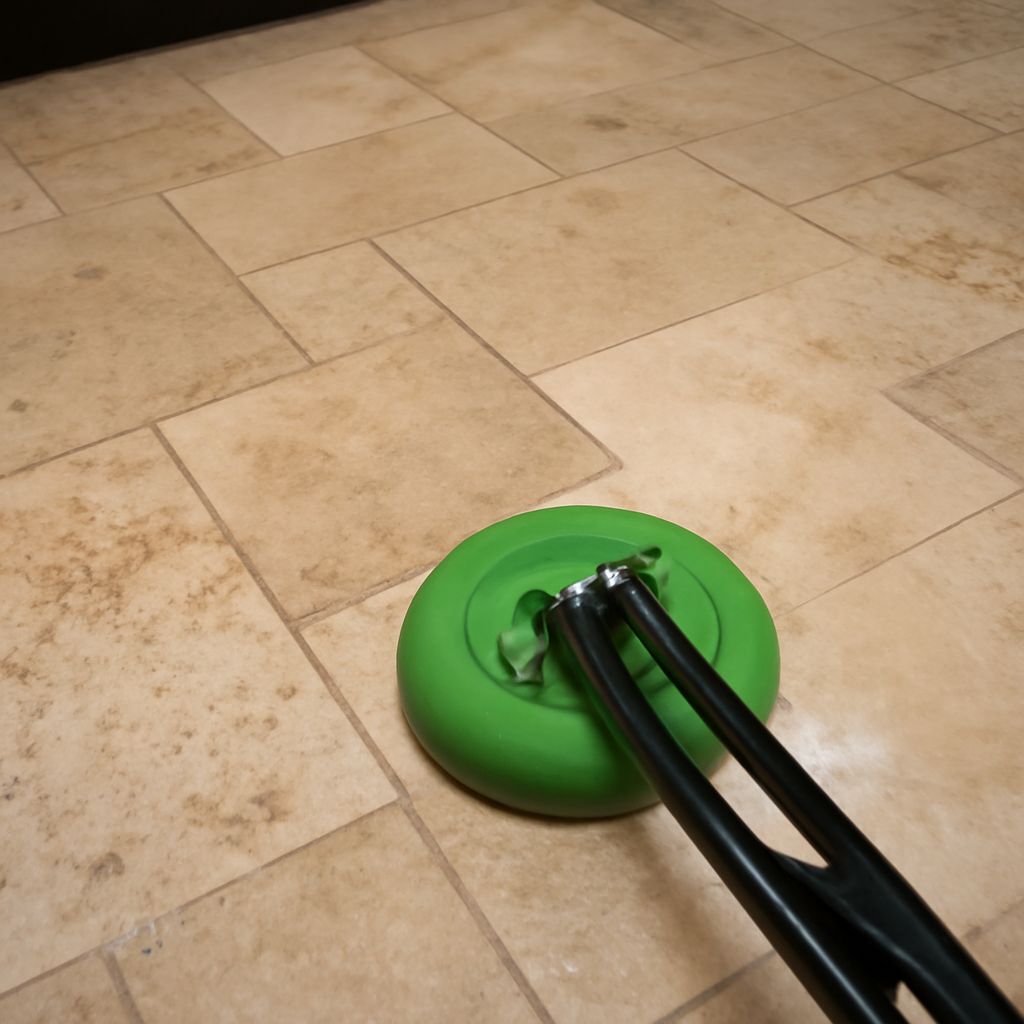
Travertine needs a gentler routine than ceramic or porcelain. The safest method is simple: remove dry grit first, wash with a pH-neutral stone cleaner, rinse with clean water, and dry right away. That sequence helps you avoid etching, dull spots, and sticky residue.
If you are learning how to clean travertine tile, keep the process controlled. Use soft tools, diluted cleaner, and light pressure. Travertine is porous and acid-sensitive, so the wrong product can mark it fast.
Choose a Travertine-Safe Cleaner
Start with a pH-neutral stone cleaner labeled safe for natural stone. This is the best choice for everyday cleaning travertine tile because it removes soil without attacking the surface.
Good tools matter as much as the cleaner. Use a microfiber dust mop, a vacuum with a hard-floor attachment, soft cloths, a non-abrasive sponge, and a clean bucket. For floors, a flat mop is better than a soaking-wet string mop.
Before cleaning a large area, spot test the product on a hidden section. Apply the diluted solution, wait a few minutes, wipe it off, and check for haze or color change after drying.
Follow the label for dilution. More product does not clean better on travertine. Too much cleaner can leave film, attract dirt, and make the tile look cloudy. If the label gives a range, use the weaker mix for routine cleaning.
Avoid cleaners that can etch or leave damage behind:
- Vinegar, lemon juice, and other acids
- Bathroom descalers and limescale removers
- Bleach, ammonia, and harsh degreasers unless a stone-safe label clearly says otherwise
- Powders, scrub pads, and abrasive brushes
Clean Travertine Tile Step by Step
Begin with dry soil removal. Sweep, dust mop, or vacuum thoroughly before any liquid touches the tile. This keeps grit from scratching the surface during washing.
- Remove loose dirt from the entire area.
- Mix the pH-neutral cleaner exactly as directed.
- Dampen, not soak, your mop or cloth.
- Work in small sections so the cleaner does not sit too long.
- Wipe the tile with light, even passes.
- Rinse the section with clean water.
- Dry immediately with a clean microfiber towel.
For floors, wring the mop well so the surface is only lightly damp. Travertine does not like standing water, especially in filled holes or along grout lines. For walls, counters, or shower surrounds, use a soft cloth or sponge and wipe the area in small sections.
The rinse step is important. Cleaner residue can dull the finish and make the tile feel tacky. Use fresh water, not the same wash solution, and change the rinse water when it looks cloudy.
Immediate drying helps prevent water spots and mineral marks. It also lets you inspect the surface right away. If the tile still looks streaky after drying, the usual cause is too much cleaner or not enough rinsing.
Treat Stains, Grout, and Spills
First decide whether you are dealing with surface soil or an absorbed stain. Surface soil usually wipes away with the stone-safe cleaner. Absorbed marks need a different response, and not every stain has the same fix.
For fresh spills, blot first. Do not rub liquid into the pores. Lift the spill with a dry cloth, then clean the area with diluted stone cleaner and rinse. This matters for coffee, wine, juice, cooking oil, and sauces.
For oily marks, use a stone-safe poultice or an absorbent cleaner made for natural stone if the label fits travertine. These products pull some stains from the pores, but they are not a guaranteed cure. Follow the product directions and test in a hidden spot first.
For mineral or rust-like discoloration, do not reach for an acid cleaner. Acid can etch travertine while still failing to solve the stain. If you are unsure what caused the mark, start with a stone-safe cleaner and stop if the spot changes the finish.
Grout needs a separate but gentle approach. Clean grout with the same pH-neutral stone cleaner and a soft brush or old soft toothbrush. Scrub lightly along the joint, not across the tile face. Rinse and dry well so loosened soil does not settle back into the line.
Keep spill response simple:
- Blot immediately
- Lift solids with a plastic scraper, not metal
- Clean with diluted stone-safe product
- Rinse with clean water
- Dry the area fully
If a stain remains after that, stop and reassess before using stronger chemistry. Travertine can be damaged faster by the wrong treatment than by the stain itself.
Seal and Maintain Travertine
Sealing does not make travertine stain-proof, but it does buy you time. A quality penetrating sealer can slow absorption and make routine how to clean travertine maintenance easier. It is most useful in kitchens, bathrooms, entries, and other spill-prone areas.
Signs you may need to reseal include darker water spots that appear quickly, slower spill cleanup, or cleaner soaking in faster than before. Do a simple water test on a hidden area: if water darkens the stone quickly, the sealer may be wearing thin.
Use the sealer label for coverage and curing time, and make sure the surface is completely clean and dry before application. Sealing over residue can trap haze or dirt.
A realistic maintenance routine is enough for most homes:
- Dust mop or vacuum often to remove grit
- Wipe spills as soon as they happen
- Wash high-traffic areas with a diluted pH-neutral stone cleaner when needed
- Rinse and dry after each wet cleaning
- Recheck grout, high-use spots, and seal performance every few months
Use the same caution on counters, shower walls, and floors. Travertine stays at its best when you keep the routine light, the cleaner stone-safe, and the surface dry after washing.