
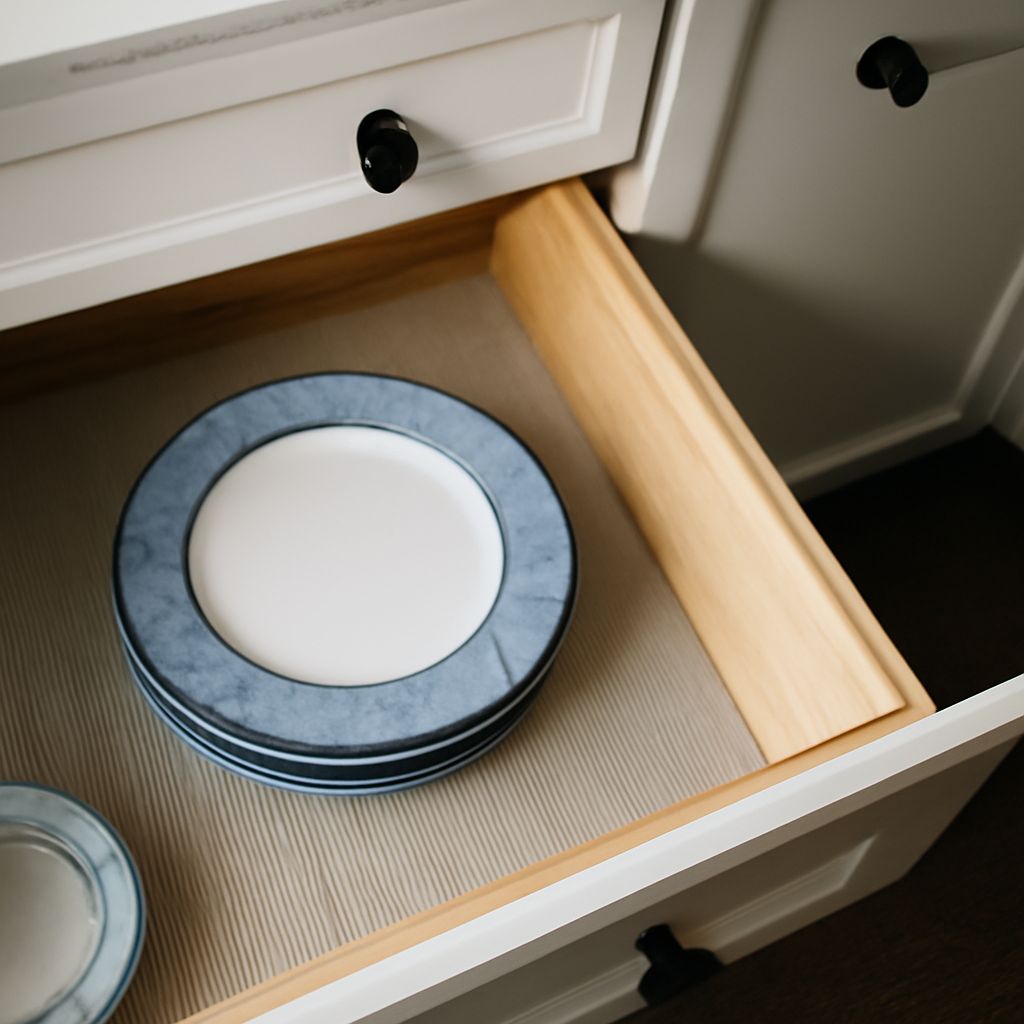
Shelf liner is useful when you want easier cleanup, less slipping, or extra protection on finished surfaces. It is not necessary for every shelf or drawer, but it can make sense in kitchens, pantries, bathrooms, and utility cabinets.
The best results come from matching the liner to the job. A kitchen shelf liner for a dry pantry shelf needs different grip and cleaning features than a kitchen drawer liner under utensils or a liner on a damp cabinet base.
When Shelf Liner Is Worth Using
Shelf lining helps most when the surface is smooth, painted, stained, or hard to clean. It adds a removable layer between stored items and the cabinet or shelf.
Use it when you want to prevent scratches from cans, jars, tools, or dishes. It also helps keep lightweight items from sliding, especially on wire shelves, polished wood, or glossy laminate.
It is often worth using in these situations:
- Pantry shelves: to catch crumbs, flour, and sticky spills.
- Kitchen cabinets: to protect painted or stained shelves from plate edges and moisture.
- Kitchen drawers: to reduce movement from cutlery, utensils, or gadgets.
- Under sink areas: to add a washable barrier where moisture is possible.
It may not be worth the effort on rough, unfinished, or already heavily textured surfaces. Those surfaces often grip items naturally, and liner can make measuring and cleaning harder.
Skip liner if the shelf already cleans easily and the contents stay put. That saves time and avoids trapped dust under an unnecessary layer.
Choose the Right Shelf Liner Material
The right shelf liner depends on moisture, grip, cleaning, visibility, and surface protection. Start with the location, then choose the material that solves the main problem without creating a new one.
Adhesive vs. non-adhesive
Adhesive liner sticks to the surface and stays in place well. It suits high-traffic shelves where shifting would be annoying, but removal can be difficult on painted wood or older finishes.
Non-adhesive liner is easier to remove, reposition, and replace. It works well for renters, seasonal storage, or shelves that may need frequent cleaning.
Choose adhesive only when you want a more permanent fit and the surface can handle it. Choose non-adhesive when you want flexibility or a lower-risk installation.
Cushioned, washable, and paper-style liners
Cushioned liner offers more padding. It is helpful for fragile glassware, dishes, or items that should not rattle against hard shelves.
Washable liner is usually the best choice for kitchens, pantries, and under-sink storage. It resists spills and can be wiped or rinsed clean more easily than paper-style options.
Paper-style shelving paper is thin, inexpensive, and often easy to trim. It can work for dry, low-traffic shelves, but it is less forgiving around moisture and repeated cleaning.
Match the finish to the job:
- Need grip: choose a textured or non-slip liner.
- Need moisture resistance: choose vinyl, washable, or coated material.
- Need surface protection: choose cushioned or thicker non-adhesive liner.
- Need visibility: choose clear or lightly patterned liner so labels stay readable.
- Need easy replacement: choose non-adhesive or paper-style liner.
For pantry shelves, favor a wipeable non-slip surface that holds jars and catches crumbs. For cabinet shelves, focus on protection and easy cleanup. For a kitchen drawer liner, prioritize a flat surface that keeps utensils from sliding without bunching.
Measure, Cut, and Install Shelf Lining
Good installation starts with accurate sizing. Measure each shelf or drawer separately, even if the cabinet looks symmetrical. Small differences in depth or width are common.
Prep the surface
Before installing shelf lining, empty the space and clean it thoroughly. Remove dust, grease, crumbs, and moisture so the liner lies flat and stays put.
- Clear the shelf or drawer completely.
- Vacuum or wipe away loose debris.
- Wash greasy areas with a mild cleaner, then dry fully.
- Check for splinters, raised screws, or rough spots.
- Let the surface dry before cutting or placing the liner.
If the shelf has a lip, trim the liner so it does not curl upward. If the shelf is wire, use a stiffer liner or a cut-to-fit insert that bridges the gaps better than thin paper.
Fit pantry shelves, cabinets, and drawers
Measure width and depth with a tape measure. For drawers, measure the inside walls, not the outer front. For shelves, measure the usable flat area, not the full cabinet frame.
Add a small allowance only if the material needs it. Most liner should fit just inside the edges, because oversized pieces wrinkle and lift more easily.
- Measure the space in inches or centimeters.
- Transfer the dimensions to the back of the liner.
- Cut with sharp scissors or a utility knife and straight edge.
- Dry-fit the piece before removing any backing or final placement.
- Trim gradually until the edges sit flat.
Install from one side and smooth outward. That reduces trapped air and keeps the liner aligned. On non-adhesive liner, press corners down after fitting so they do not lift. On adhesive liner, work slowly and avoid stretching, which can cause later curling.
For pantry shelves, leave enough space at the front to see labels and grab containers easily. For cabinets, keep the liner flush with the back edge so it does not catch on stored items. For kitchen drawers, ensure the liner lies flat under utensil trays or bins, with no folded edges that collect crumbs.
If you are lining a deep drawer, consider putting a single removable piece under each organizer rather than one oversized sheet. That makes cleaning easier and prevents shifting when the drawer opens and closes.
Clean, Reposition, and Replace Liner
The best shelf liner is the one you can maintain easily. Wipe washable liner with a damp cloth and mild soap when needed. Dry it fully before putting items back, especially in cabinets and drawers where moisture lingers.
For pantry shelves, brush out crumbs first so they do not smear across the surface. For kitchen drawers, lift the liner occasionally and clean underneath if debris has worked into the edges.
Reposition liner when you see these failure points:
- Curling edges: usually caused by poor sizing, heat, or repeated opening and closing.
- Sliding: often caused by a smooth surface with no texture or too little grip.
- Trapped crumbs: common when the liner is cut short, wrinkled, or not cleaned regularly.
- Difficult removal: a sign that adhesive liner has aged or bonded too strongly.
Replace the liner if it stays stained, smells musty, cracks, or no longer lays flat. Paper-style shelf paper usually needs replacement sooner than washable vinyl or cushioned options. In damp spaces, replace any liner that shows mildew or warping right away.
To avoid difficult removal, test adhesive shelf liner on a hidden area first when possible. If you expect to change the setup often, keep to non-adhesive material and replace only the worn sections. That gives you the protection of shelf lining without turning maintenance into a repair job.